
In today’s rapidly evolving business world, the role of Human Resources (HR) has expanded far beyond hiring and payroll. Modern HR leaders are now responsible for creating people-first strategies, enhancing employee engagement, and driving organizational success. To achieve this efficiently, companies are turning to intelligent digital tools like HRMS (Human Resource Management System) software.
The future of HR is digital, data-driven, and employee-centric — and HRMS software is at the heart of this transformation. At Nynedge, our HRMS solution empowers organizations to manage their workforce smarter, automate routine tasks, and create a workplace that thrives on innovation and transparency.
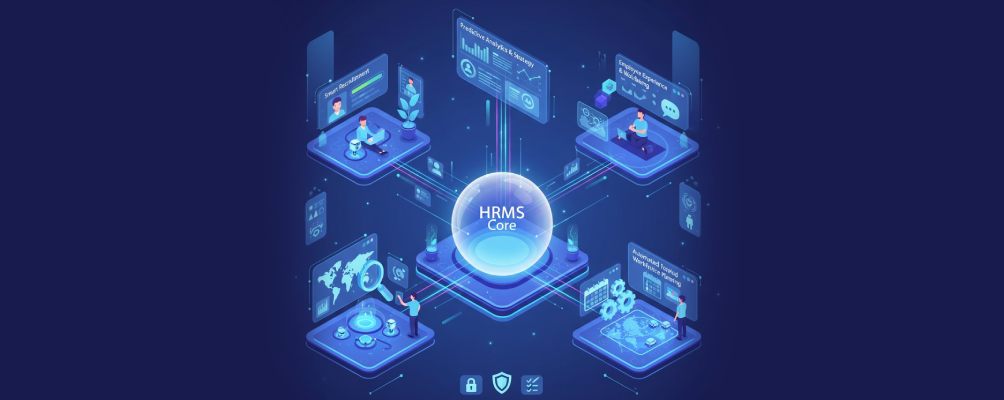
Traditionally, HR departments were administrative hubs focused on compliance, record-keeping, and payroll. But the modern business landscape demands a more strategic approach — one that aligns HR processes with company goals. HRMS software automates administrative tasks, freeing HR professionals to focus on employee development, talent acquisition, and culture building.
This shift from paperwork to people-work is the cornerstone of the future of HR.
Data is the new currency of business success. HRMS software provides real-time analytics and dashboards that help HR teams make informed decisions regarding hiring trends, attrition rates, performance scores, and employee satisfaction.
With advanced reporting tools, Nynedge HRMS enables HR professionals to identify patterns, predict workforce needs, and plan proactive strategies that boost retention and productivity.
The rise of remote and hybrid work models has redefined how organizations operate. Cloud-based HRMS systems allow HR teams and employees to access HR data from anywhere, at any time.
Whether managing attendance, processing payroll, or conducting virtual onboarding, cloud HRMS platforms ensure seamless collaboration across borders, making global workforce management simpler and more efficient.
Modern employees expect autonomy and transparency in workplace processes. HRMS software introduces employee self-service portals where individuals can apply for leave, download payslips, update profiles, and access training modules independently.
This not only reduces HR’s workload but also boosts employee engagement by giving them control over their own data and career growth.
Automation is no longer optional; it’s essential. HRMS automates repetitive HR functions such as attendance tracking, payroll management, performance reviews, and compliance reporting.
This allows HR teams to redirect their energy toward high-value activities like strategy, talent development, and workforce innovation — ensuring greater productivity and accuracy across the board.
Artificial Intelligence (AI) is revolutionizing HRMS systems. AI-powered tools can analyze employee behavior, predict attrition risks, suggest personalized training, and even assist in smart recruitment by identifying the best candidates.
The integration of AI with HRMS platforms like Nynedge HRMS empowers businesses to forecast future trends and make data-backed strategic decisions that enhance workforce performance.
The first impression of a company begins during onboarding. A robust HRMS system streamlines the entire onboarding process — from document submission to training and role assignment.
HRMS ensures new hires feel welcomed and well-guided, reducing onboarding time and improving retention rates. Built-in learning modules and e-training tools further empower continuous skill development.
With employee data becoming increasingly sensitive, maintaining compliance and privacy is critical. HRMS software secures all employee records with encrypted storage and access controls.
Systems like Nynedge HRMS also automatically update according to local labor laws and compliance requirements, minimizing legal risks and ensuring organizational safety.
Communication gaps can slow down decision-making and reduce morale. HRMS software connects different departments through shared data systems, ensuring that HR, finance, and management teams operate on the same page.
With instant access to accurate data, collaboration becomes smoother, faster, and more productive — leading to better overall organizational performance.
The future of HR is all about agility, adaptability, and innovation. HRMS systems act as the digital backbone for forward-thinking organizations, enabling them to manage an evolving workforce effectively.
From remote collaboration tools to AI analytics and performance dashboards, HRMS technology ensures companies are ready to meet tomorrow’s HR challenges head-on.
1. Scalability: Cloud HRMS systems grow effortlessly with your organization.
2. Customization: Businesses can tailor workflows and dashboards to fit their HR policies.
3. Remote Accessibility: Cloud storage ensures secure access from any location or device.
4. AI Integration: Smart automation reduces manual intervention, ensuring faster HR decisions.
While HRMS software brings immense advantages, there are a few challenges to address:
1. Implementation Cost: Initial setup may require investment, but long-term ROI is significant.
2. Learning Curve: Employees may need short training to adapt to the system, which Nynedge HRMS simplifies through an intuitive user interface.
3. Data Migration: Transferring legacy data requires careful handling to maintain integrity and accuracy.


 +1 949 899 7760
 +49 1525 4941805
 +91 98314 11946