
In the ever-evolving world of interior design, personalization has become the hallmark of exceptional living spaces. Clients no longer seek generic designs; they crave interiors that reflect their lifestyle, tastes, and personality. Artificial Intelligence (AI) is transforming how designers achieve this level of personalization, offering tools and insights that were unimaginable just a few years ago.
From generating creative concepts to optimizing layouts, selecting materials, and predicting client preferences, AI empowers designers to deliver homes and offices that are not only beautiful but also uniquely tailored to their inhabitants.
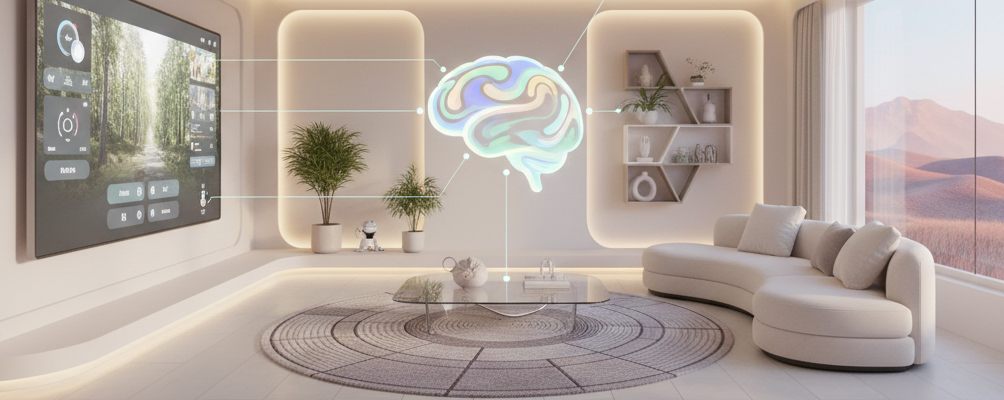
One of the primary challenges in interior design is fully understanding a client’s needs and translating them into a cohesive design. AI helps bridge this gap by analyzing client data such as lifestyle habits, style preferences, and functional requirements.
AI algorithms can interpret this data to recommend furniture arrangements, color palettes, and decorative elements that align with the client’s personality. This level of insight enables designers to create spaces that feel deeply personal and resonate emotionally with those who inhabit them.
Generating multiple design concepts manually can be time-consuming and may limit creativity. AI-powered tools can generate a wide array of design options in minutes, offering combinations of layouts, styles, and materials that might not have been considered otherwise.
Designers can use these AI-generated concepts as inspiration or as a foundation to refine and perfect their unique vision. This not only accelerates the creative process but also ensures a diverse range of personalized options for the client.
Maximizing the functionality and aesthetics of a space is a cornerstone of great interior design. AI tools simulate multiple layout possibilities, considering factors such as room dimensions, furniture sizes, lighting, and traffic flow.
By evaluating these variables, AI helps designers determine the optimal arrangement for each room, balancing comfort, efficiency, and visual appeal. The result is a space that feels intuitive, open, and fully tailored to the client’s lifestyle.
Choosing the perfect materials and color schemes can be overwhelming, especially when aiming for a cohesive, personalized environment. AI assists by analyzing trends, lighting conditions, material durability, and client preferences to recommend the best finishes.
This ensures that every choice—from flooring and wall treatments to furniture upholstery and accent pieces—supports the overall design vision while aligning with the client’s unique tastes.
AI-powered 3D renderings, virtual reality (VR), and augmented reality (AR) tools allow clients to experience their personalized spaces before construction begins. They can virtually walk through rooms, experiment with furniture placement, or test different color schemes.
This immersive visualization builds client confidence, reduces misunderstandings, and ensures that the final space aligns perfectly with their expectations.
AI can predict how design choices will perform over time, identifying potential issues before they occur. For example, it can analyze traffic patterns to optimize furniture placement or evaluate lighting conditions to ensure energy efficiency and comfort.
These predictive insights empower designers to make informed decisions, reducing errors, minimizing costly revisions, and ensuring that the personalized space functions beautifully in daily life.
AI can provide tailored recommendations for décor, furniture, and accessories based on the client’s style profile and the specific space requirements. Coupled with smart automation tools, AI can help schedule installations, track procurement, and manage project milestones efficiently.
This allows designers to focus on creative problem-solving and personalized touches, while AI handles the data-driven and administrative aspects of the project.
AI systems continually learn from past projects, client feedback, and market trends. Designers can leverage these insights to refine their approach, adapt to emerging preferences, and experiment with new design concepts.
This ongoing learning ensures that each personalized living space not only meets current expectations but also anticipates future needs and trends, keeping designers ahead in a competitive market.


 +1 949 899 7760
 +49 1525 4941805
 +91 98314 11946