
The debate between Artificial Intelligence (AI) and human creativity has reached the world of interior design. While AI brings speed, data-driven insights, and automation to the table, human designers offer intuition, emotion, and an artistic touch. The real question isn’t about which is superior; it’s about how AI and human creativity can collaborate to produce exceptional interior spaces.
Designers who leverage AI tools alongside their creative expertise can streamline workflows, explore new design possibilities, and deliver projects that are both innovative and deeply personalized.
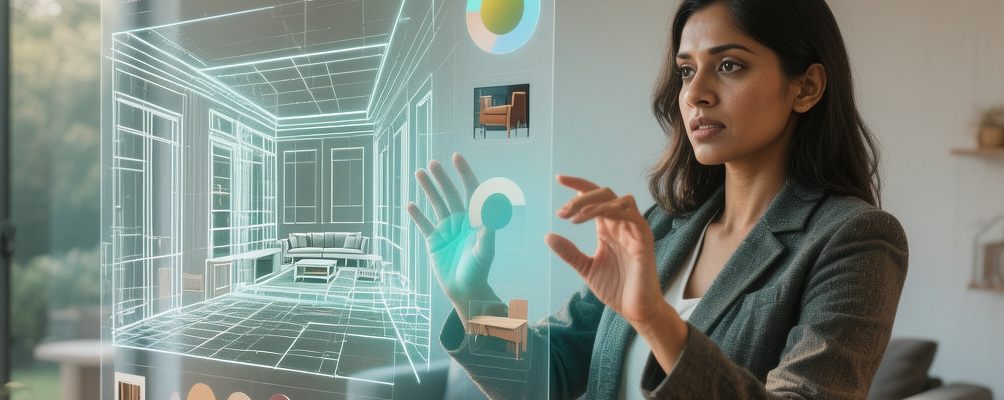
AI can handle repetitive and time-consuming tasks such as layout optimization, furniture placement, and material recommendations. By automating these processes, designers can focus more on creative decisions, experimenting with color palettes, textures, and artistic concepts that reflect their vision and the client’s preferences.
The collaboration ensures efficiency without compromising the artistic essence of the project.
AI algorithms can generate multiple design variations based on parameters set by designers. These suggestions can spark inspiration, offering combinations that designers might not have considered.
This symbiotic relationship allows designers to push creative boundaries while maintaining control over the final aesthetic, resulting in spaces that are both unique and functional.
AI can analyze client preferences, previous project outcomes, and industry trends to provide actionable insights. Designers can use this data to make informed decisions about materials, colors, and layouts.
While AI informs the decision-making process, the human designer ensures that each choice aligns with the overall vision and client expectations.
Despite AI’s capabilities, human creativity is irreplaceable when it comes to understanding emotions, cultural nuances, and personal stories that clients bring to their spaces. AI supports, rather than replaces, the designer’s intuition, helping them enhance storytelling through design elements.
The result is a perfect balance of innovation and empathy in every interior project.
AI tools such as 3D renderings, augmented reality, and virtual reality enable clients to visualize spaces before implementation. Human designers guide clients through these experiences, providing context and refining details based on emotional and practical considerations.
This collaboration builds trust, improves communication, and ensures that the client feels connected to the design journey.
Rather than seeing AI as a competitor, designers can treat it as a creative partner. AI provides inspiration, automates tedious tasks, and offers predictive insights, allowing designers to focus on what they do best—crafting innovative, visually compelling, and functional spaces.
This partnership leads to higher-quality designs delivered faster and with greater precision.


 +1 949 899 7760
 +49 1525 4941805
 +91 98314 11946